Orange
Building a community business from scratch
Company
Orange
Year
2020
Discipline
Brand Strategy & Experience Design
Platform
Events, Web App
Timeline
Ongoing (5 years)
My Role
Founder & Creative Director

THE PROBLEM
London's social scene, for people in their mid-to-late twenties, tends to cluster at two extremes. On one side: frequent, repetitive pub nights with the same faces. On the other: high-effort, infrequent occasions like weddings and festivals where you might meet someone new but the conditions aren't exactly conducive to it. There's a gap in the middle; a regular, structured environment designed specifically around the chance to meet people you wouldn't otherwise meet.
THE SOLUTION
I'd been thinking about the gap for a while, but the moment that made me act was a conversation with a friend who hosted small dinners at home. She'd invite three people and ask each of them to bring one more. Simple mechanic, but it worked.
I took that idea and scaled it: find a venue, get a DJ, invite 25 people, each brings a guest, and you have a room of 50 strangers sharing a meal and having a good time.
The first night, someone turned to me and said, "this could be massive." That was the proof point. I did it again, and again.
WHERE IS IT NOW?
10
Events run across supper club and bar nights
500
People in the Orange community
~£1.5k
Estimated profit per event
100%
Sold out across all events run
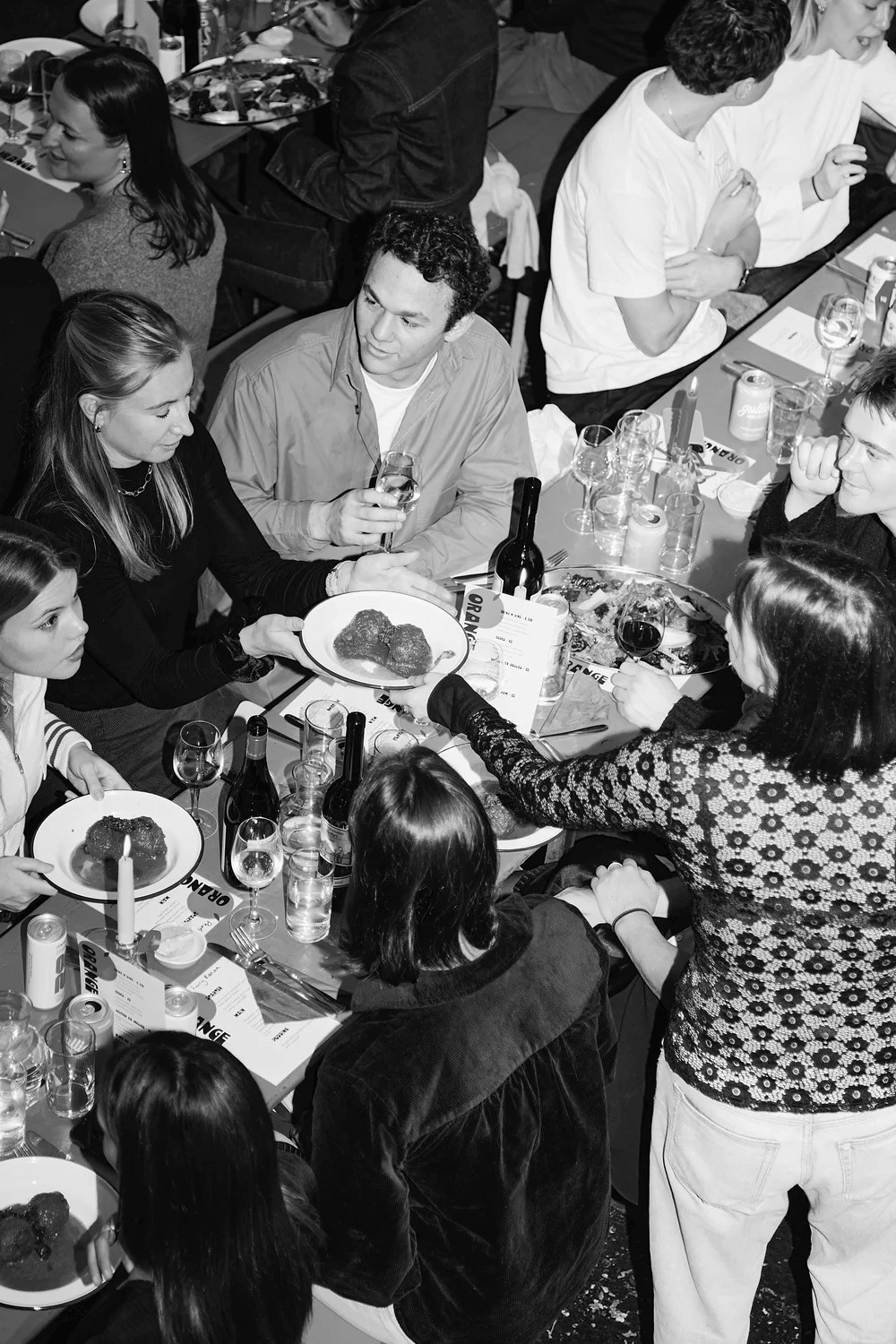
Every event has sold out. Demand grew enough that capacity expanded from 50 to 60 guests. There's now a waitlist. The venue, Hatch in London E8, has described Orange as the best event they host, which led to a partnership with favourable hire rates. Drinks revenue on top of tickets means the business turns a consistent profit.

CREATING THE EXPERIENCE
The problem with social experiences in 2026
Most hospitality and "social" social media right now chases the same thing: ostentatious, overstyled, Instagrammable spaces. Good lighting, good angles, not necessarily a good time. Orange started from a rejection of that. Good people first, then good food and drinks, then good music. Everything else is secondary.
Inspiration
Three reference points shaped the thinking.
Ellie's in Shoreditch: simple martinis, benches outside, no fuss. Good enough that Charli XCX had her wedding reception there.
Kiez in Notting Hill: German doner kebabs, cocktails, a hi-fi system. Unpretentious ingredients with a serious atmosphere.
My parents' generation in the 90s: dinner parties, park BBQ, a Tuesday phone call telling you to be at the pub on Friday. No planning, no curation, just an event with a sense of mystery.
Creating the Orange experience
Finding the venue
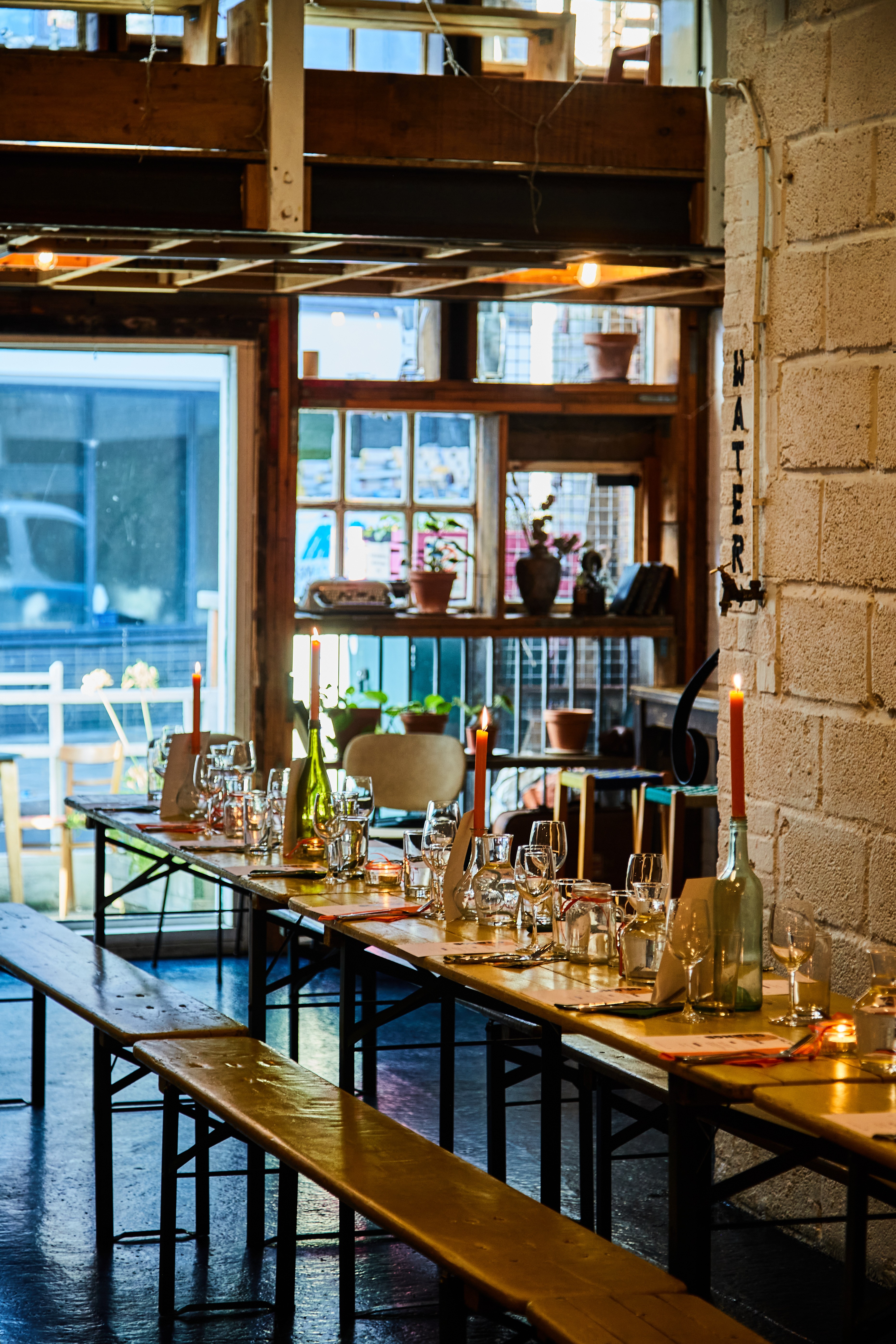
Hatch in Homerton was the perfect base. Minimal exterior, DJ decks, bar, kitchen and seating all open plan and communal, a split-level mezzanine, benches, fold-up tables. Rustic, minimal, a blank canvas rather than something already trying too hard. Hard textures softened with warm colour and plants. Nothing over the top.
Setting the experience
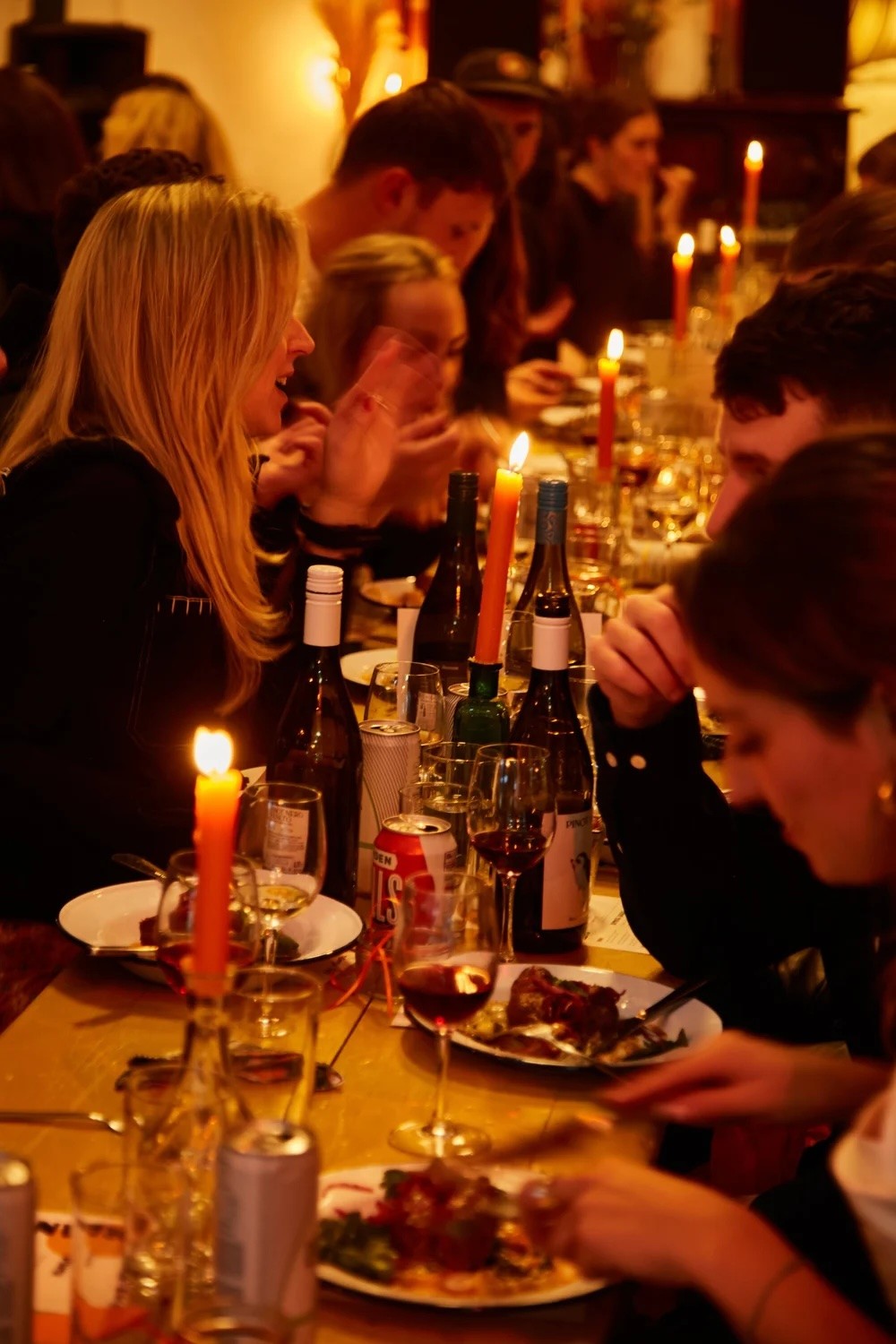
Benches instead of individual chairs, forcing people to lean in and sit closer than they normally would. Candlelight instead of overhead lighting, adding colour and warmth without needing decoration to do the work.
The format
Three courses, 25 people, 25 +1s, a rough even split of guys and girls. After two courses, everyone swaps seats, a bit of organised chaos to break up conversations and force new ones. After dessert, tables clear and the music goes up. Dancing until close, 1am. One night, one place, does everything.


ORANGE DESIGN PRINCIPLES
From all of that, three principles, applied at every layer, from how a table is laid out to how an invite is worded:
PRINCIPLE 1
Realness over perfection
No fancy restaurants, no uniform, mismatched tables. Imperfect and slightly chaotic by design. The goal isn't a flawless evening, it's one that feels lived-in and human.
PRINCIPLE 2
Energy over aesthetics
A beautiful room means nothing if it's quiet. Every decision, lighting, music, format, is made to raise energy in the room over making it photograph well.
PRINCIPLE 3
Participation over performance
Guests are given a reason to do something. The +1 mechanic, communal food, shared moments: the format forces people in rather than letting them spectate.
Together, these produce what the brand vision calls "understated chaos with warmth", the same tension every product decision gets tested against, digital or physical.
DESIGNING THE BRAND
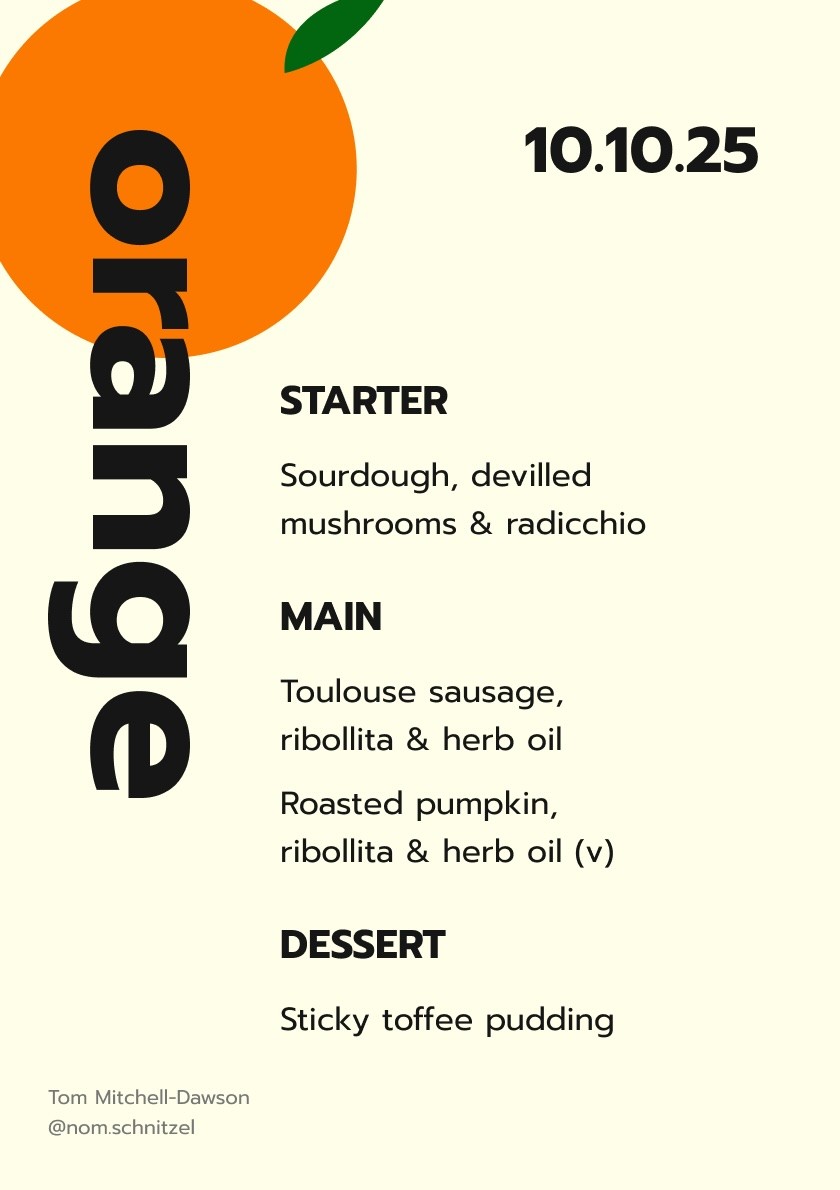
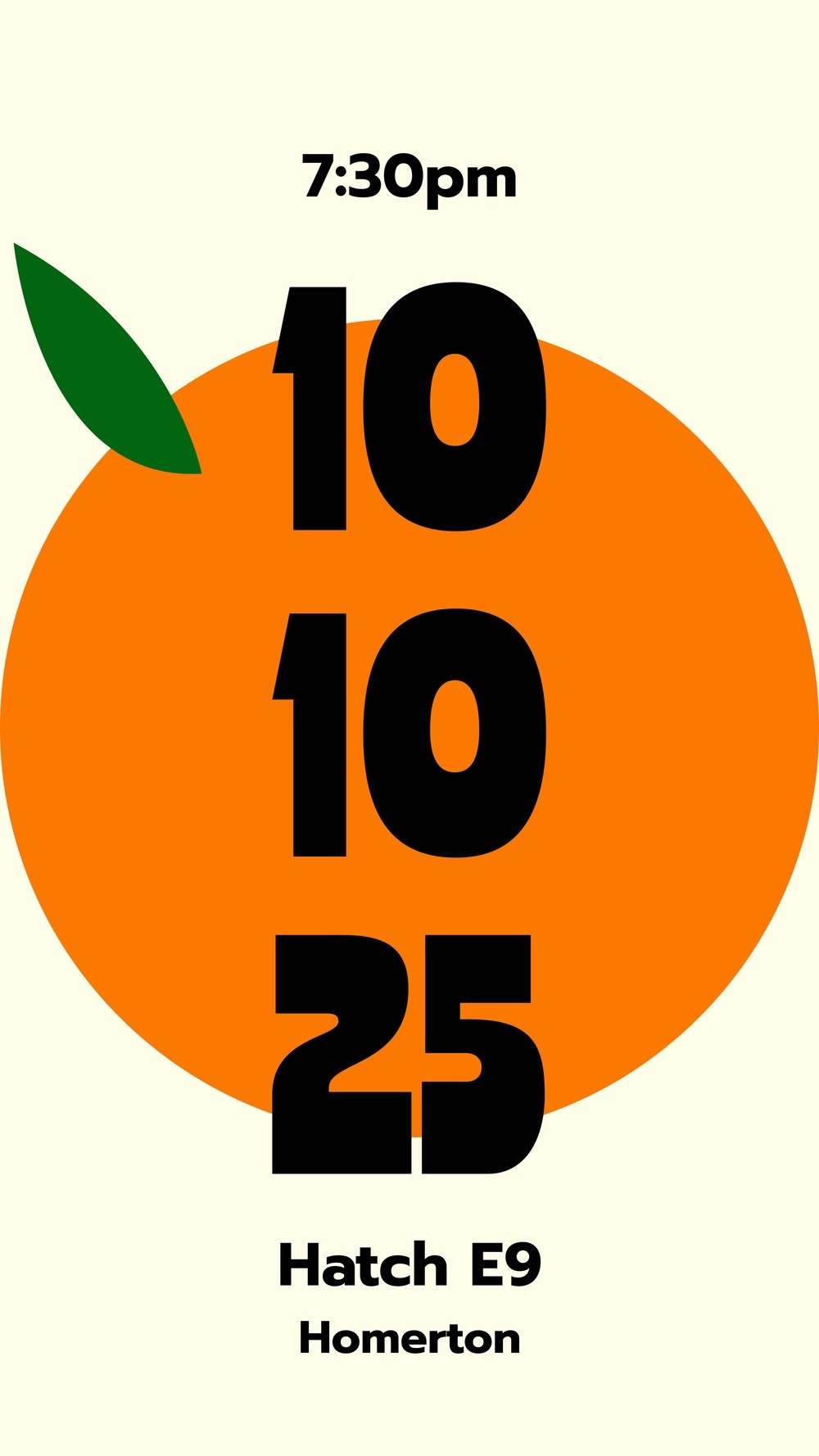
I designed the entire identity from scratch: positioning, personality, tone of voice, visual language, typography, colour, and motifs. Same discipline I'd apply to a digital product, work out what it needs to feel like before deciding what it needs to look like.

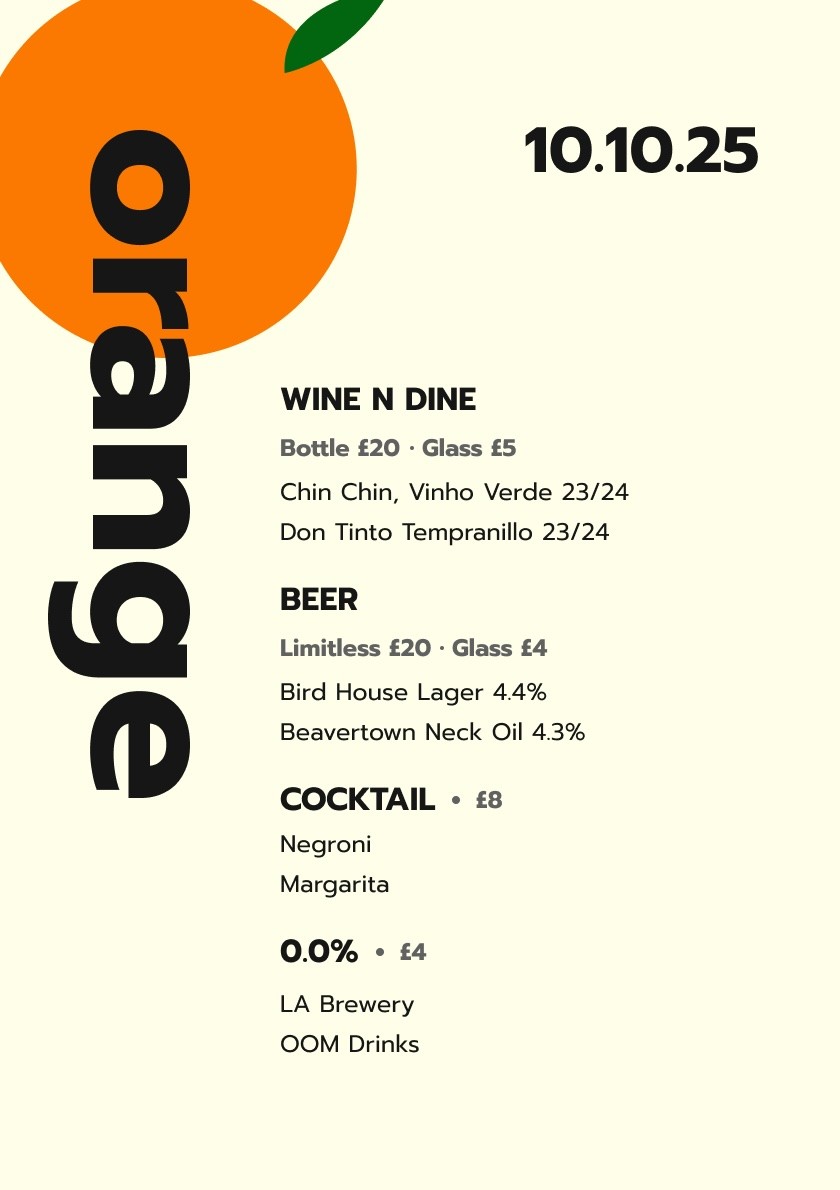
Brand personality
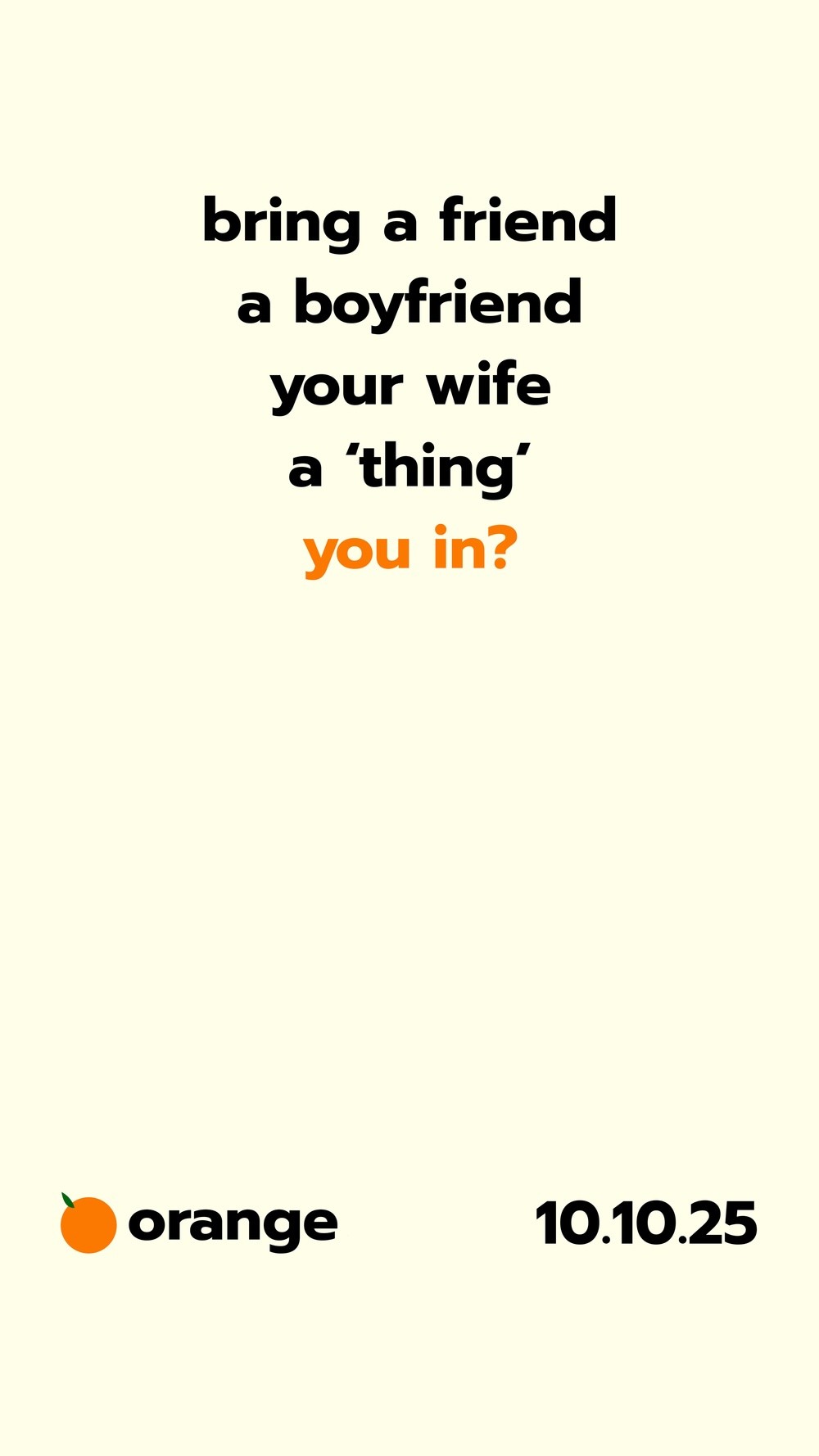
Think of Orange as a person: relaxed but intentional, playful but not childish, cool but kind. The tone of voice matches exactly: informal, slightly cheeky, inviting rather than exclusive. Every piece of copy, an invite, a caption, a newsletter line, reads like a friend telling you about a good night out, never a business selling you a ticket.
Positioning
Orange sits against overly curated "seen to be seen" hospitality and sterile, minimalist "cool" brands. It leans into realness over perfection, energy over aesthetics, participation over performance, the same principles shaping the physical room, now carried through to how the brand looks and sounds.
Visual direction
Colour built around a bold, saturated orange with warm neutrals, never washed-out "Scandi minimal" tones, colour that feels like energy entering a room. Typography playful but controlled, human rather than corporate. The logo stays adaptable across formats, with enough imperfection to feel human-made, not templated.
Imagery and tone
Real people, not posed. Movement over stillness, a little blur, a little imperfection welcome, if it looks staged, it's failed. The rule of thumb: it should feel like you were there, not like it was shot for the brand.
The North Star
"You don't know exactly what's going to happen, but you know it'll be a good time." Every visual decision gets tested against that line, if it makes Orange feel more curated or more predictable, it's wrong.

BUILDING THE ORANGE APP
Case study coming soon
I've used Claude Code and Figma Make to build a real, working booking app for Orange, replacing the WhatsApp threads and spreadsheets I was running the whole operation on.
WHAT I'VE ITERATED ON
Ten events in, the product looks significantly different from where it started. Most of the changes came from noticing what wasn't working and fixing it, the same loop as any digital product.
OPERATIONS
Solo to streamlined
The first event was run entirely alone; food going cold, WhatsApp conversations missed, I was being stretched too thin. Now, Stripe payments connected to booking links, templated guest invites capturing dietaries and relationship status, and a paid person on the day for guest experience and table service.
VENUE
Partnership over transaction
An increasingly strong relationship with Hatch has resulted in venue hire capped at £100 per hour versus £150 for other events. Built through consistency and reputation rather than negotiation.
ACQUISITION
Network to Instagram
Moved from relying on personal network to Instagram as the primary lead generation channel, bringing in guests who don't know me, which is the whole point of Orange.
CAPACITY
Demand-led growth
Expanded from 50 to 60 guests after consistent sellouts and waitlist pressure. A straightforward product decision, increase supply when demand is proven.
WHAT'S NEXT
The long-term vision for Orange is a roaming members club; no fixed address, no fixed format, but a consistent community and a consistent feeling. The format can change. The reason for doing it doesn't.
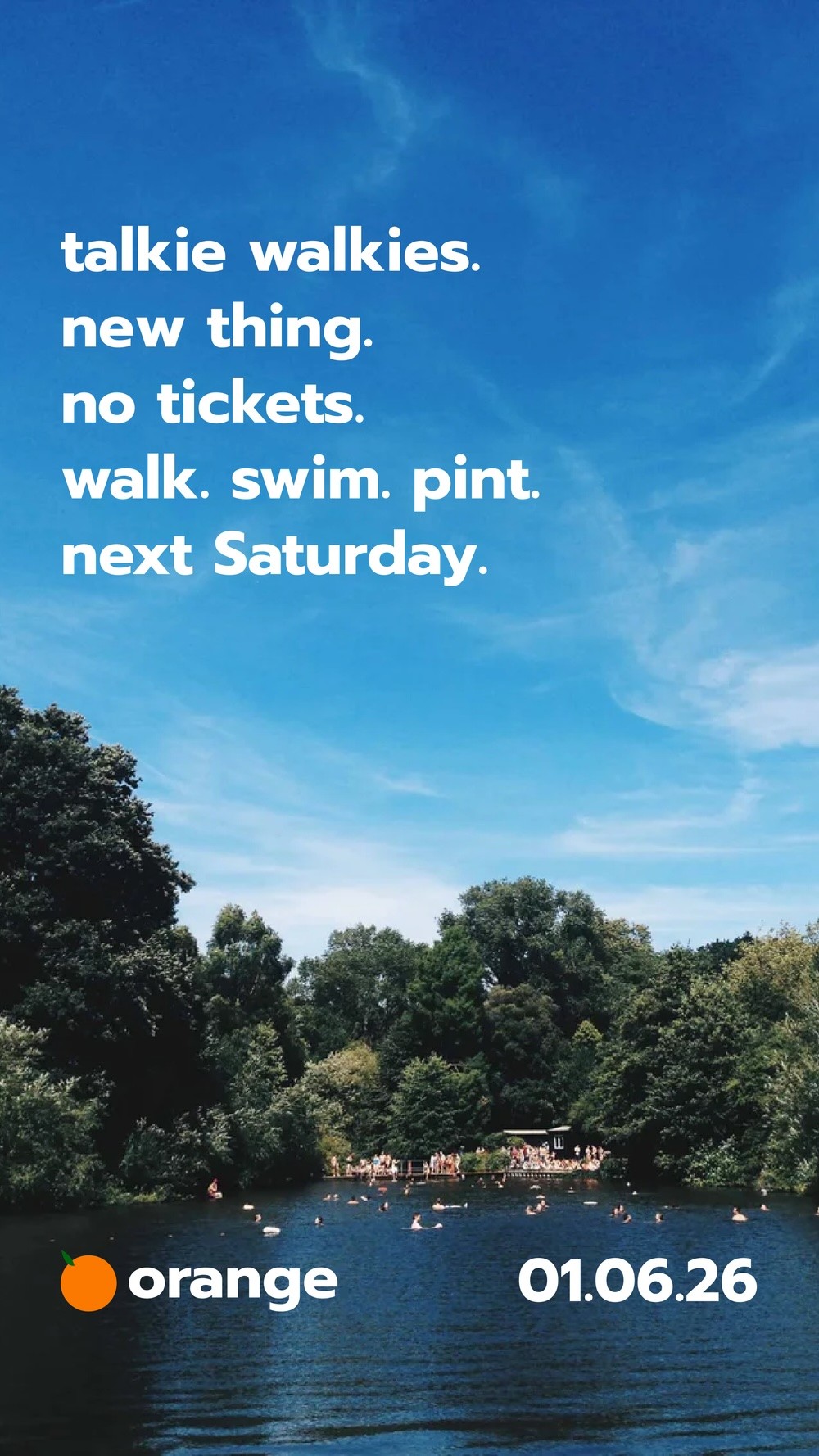
Walks
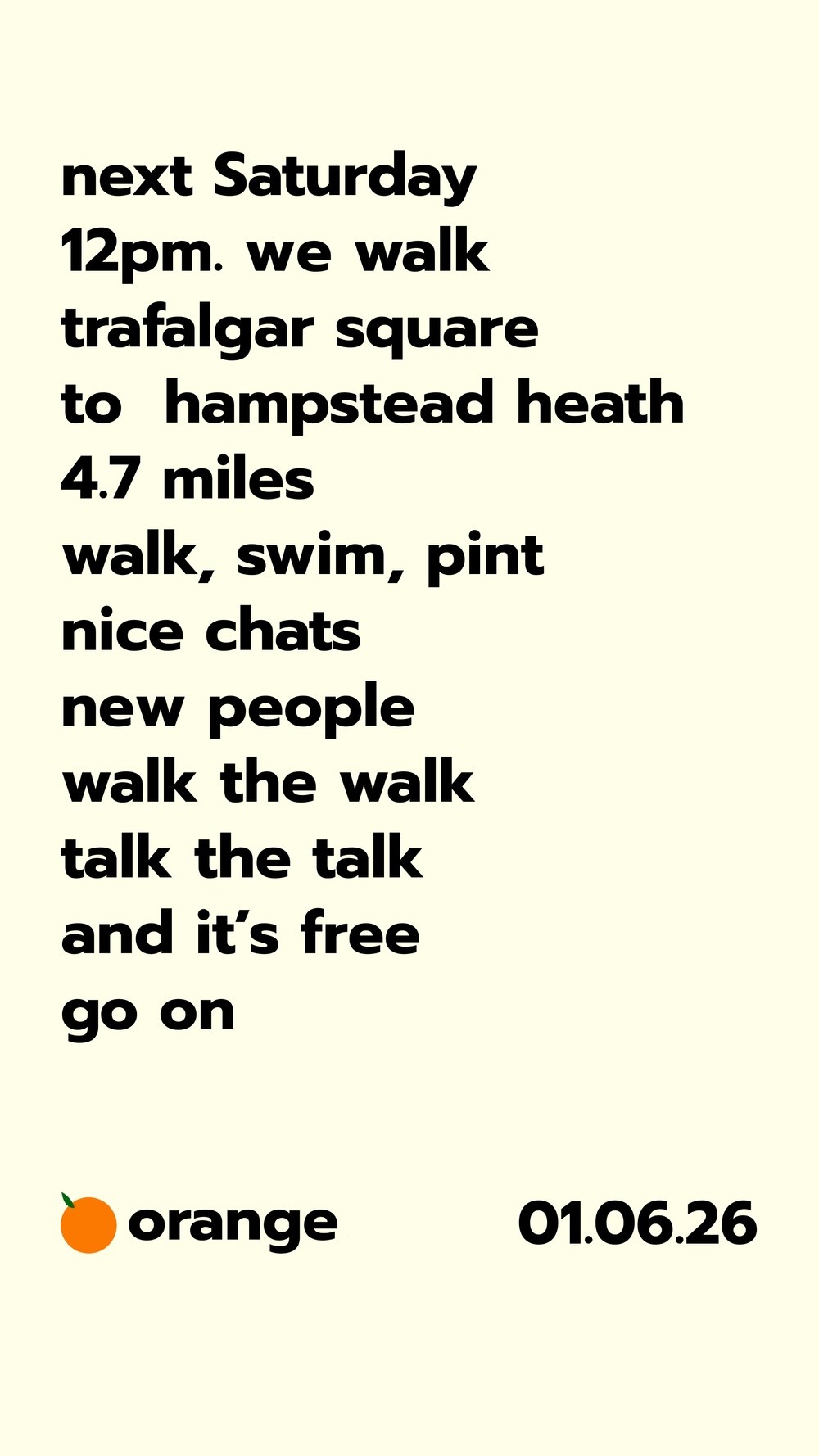
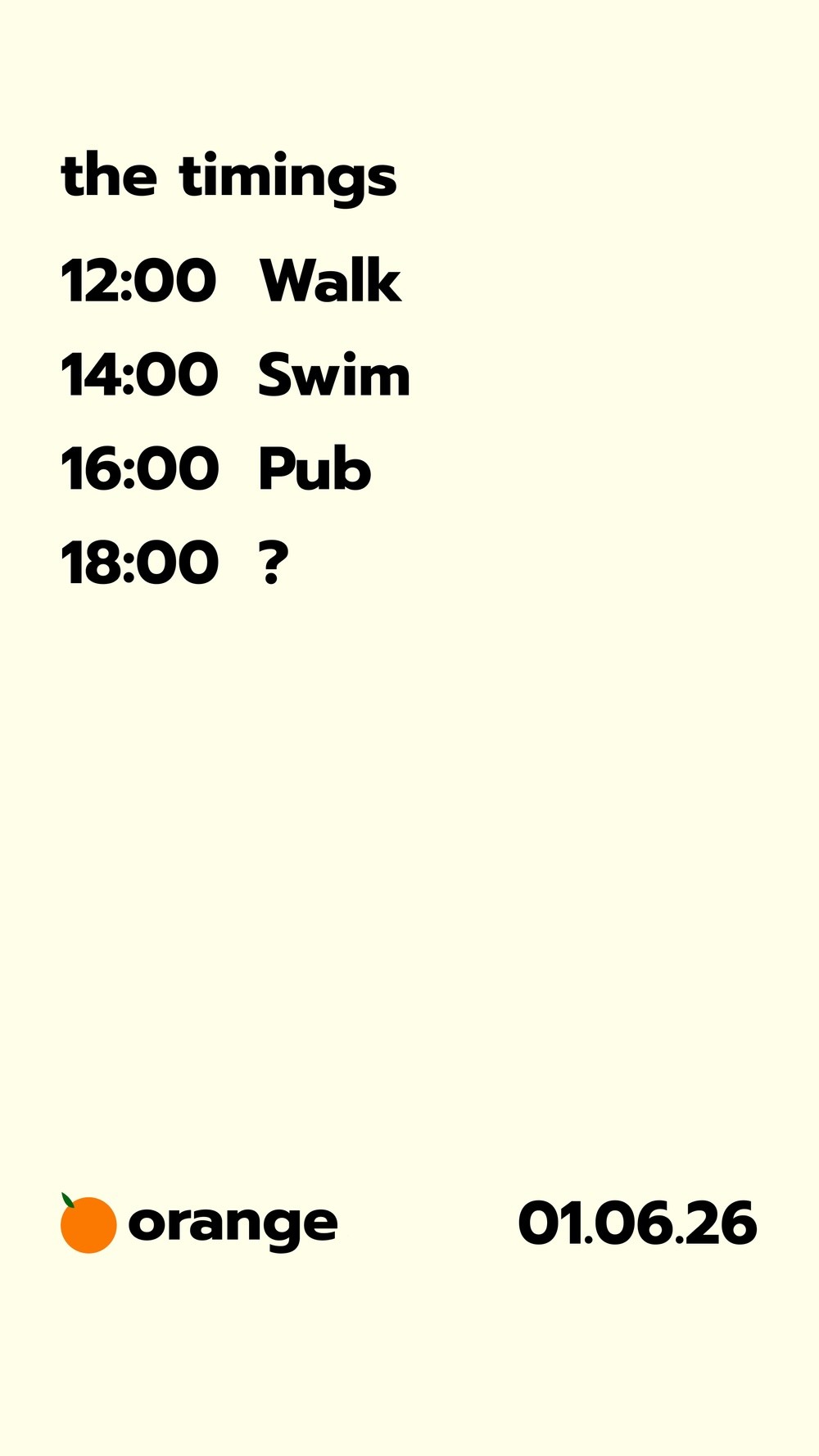
Monthly Sunday morning walks; Hampstead Heath, a swim in the lido, finish in a pub by 4pm. Lower barrier, higher frequency, same community energy.
The Juice
A newsletter to build the Orange world beyond the events themselves. Upcoming events, what’s on in London, album challenge engagement. Content that feels like the brand: warm, slightly unpredictable but worth opening.
WHAT ORANGE HAS TAUGHT ME ABOUT PRODUCT
Running Orange has been a useful reminder that product thinking isn't exclusive to digital. The same instincts apply: find the gap, design the experience, test it with real people, iterate on what isn't working, and build something that grows without you having to push it. The +1 model is a growth loop. The venue partnership is a supplier relationship. The shift from personal network to Instagram is a channel strategy decision. None of it required a screen.
The brand challenge: making something that feels cool without trying, is one I think about a lot in digital product too. The best products don't announce themselves. They just work, and people tell other people.